

Blog
Understanding Phase 3 Clinical Trials: What the Data Says About Retatrutide

Educational & Laboratory Research Disclaimer: The information provided in this article is strictly for educational, scientific, and in-vitro laboratory research purposes. Retatrutide is an investigational compound undergoing clinical evaluation and is not approved by the Therapeutic Goods Administration (TGA) or any global regulatory body for human consumption, clinical treatment, or therapeutic use. It must not be administered to humans or animals under any circumstances.
The landscape of metabolic research is shifting rapidly from single- and dual-receptor target paradigms toward triple-receptor agonists. At the center of this scientific evolution is Retatrutide Australia (LY3437943), a novel peptide engineered to target three distinct metabolic pathways simultaneously.
As data from ongoing global development programs—most notably the extensive Phase 3 TRIUMPH clinical trial program—continue to emerge, researchers and clinicians are analyzing how triple agonism alters physiological markers compared to established GLP-1 and GIP/GLP-1 therapies.
This analytical overview examines the structural characteristics of Retatrutide, key efficacy metrics reported across major trial cohorts, and the biological mechanisms driving these research outcomes.
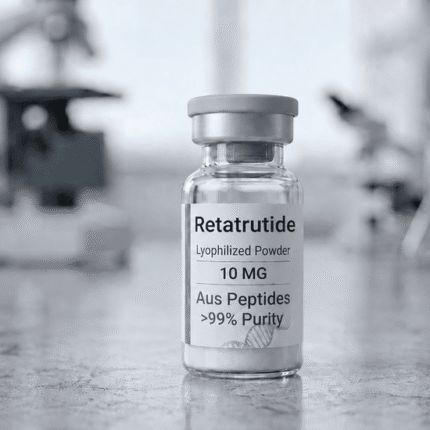
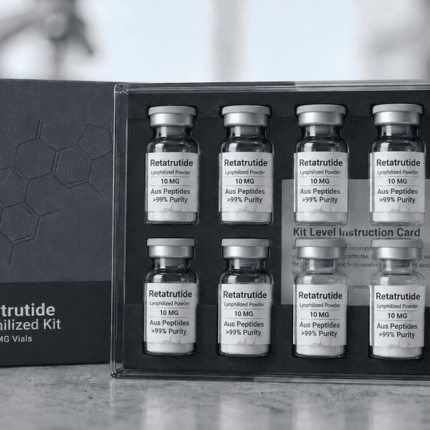
Retatrutide
Retatrutide Australia — 10mg Research Peptide Looking to source high-purity Retatrutide Australia researchers can rely on? Retatrutide 10mg is a
Select options
This product has multiple variants. The options may be chosen on the product page
1. Structural Architecture & Pharmacokinetics
Retatrutide is designed to achieve precise binding affinities across three separate receptor systems while maintaining an extended circulation profile suitable for once-weekly research models.
Molecular Backbone
Retatrutide consists of a synthetic 39-amino-acid peptide backbone derived from the native sequence of human Glucose-dependent Insulinotropic Polypeptide (GIP).
Lipid Conjugation Strategy
To optimize pharmacokinetic parameters, the primary peptide chain is conjugated at Lysine-30 to a C20 fatty di-acid chain via a specialized linker. This chemical modification allows high-affinity, reversible binding to human serum albumin.
Extended Plasma Half-Life
Thanks to this lipidation design and built-in resistance to dipeptidyl peptidase-4 (DPP-4) enzymatic degradation, Retatrutide exhibits a prolonged plasma half-life of approximately 6 days in human clinical studies, supporting consistent once-weekly administration protocols.
2. Receptor Affinities and Multi-Vector Signaling
Unlike single-agonist (Semaglutide) or dual-agonist (Tirzepatide) molecules, Retatrutide engages three separate target receptors with calibrated relative potencies:
- GIP Receptor (GIPR) — High Potency Agonism: Exhibits approximately 8.9-fold higher potency compared to native endogenous GIP. High GIP activation enhances glucose-dependent insulin secretion, improves adipocyte sensitivity, and buffers central gastrointestinal signaling.
- GLP-1 Receptor (GLP-1R) — Moderated Agonism: Exhibits approximately 2.5-fold lower potency relative to native GLP-1. This calibrated activity effectively delays gastric transit and triggers central hypothalamic satiety pathways while minimizing gastrointestinal intolerance.
- Glucagon Receptor (GCGR) — Moderated Agonism: Exhibits approximately 2.9-fold lower potency relative to native glucagon. Direct GCGR engagement accelerates mitochondrial fatty acid beta-oxidation in hepatic tissue and elevates resting energy expenditure.
3. Key Metrics from the TRIUMPH Clinical Trial Program
The global Phase 3 TRIUMPH clinical trial program evaluates the efficacy, safety, and metabolic impacts of Retatrutide across thousands of trial participants worldwide. Data from phase 2 trials published in peer-reviewed literature alongside preliminary phase 3 readouts highlight several key metabolic parameters:
Weight Reduction Trajectory
In trial cohorts receiving higher dose regimens (8 mg and 12 mg once weekly), trial data demonstrated average total body weight reductions exceeding 24% over a 48-week duration. Notably, researchers observed that weight loss trajectories had not reached a plateau by week 48, indicating sustained metabolic activity.
Glycemic Regulation Parameters
In trial arms focusing on type 2 diabetes, Retatrutide demonstrated significant reductions in HbA1c levels, with a substantial proportion of trial participants achieving normoglycemia (HbA1c < 5.7%). The synergistic action of GLP-1 and GIP enhanced insulin output strictly during elevated plasma glucose states.
Hepatic Fat Reduction (MASLD Analysis)
A landmark finding in Retatrutide sub-studies involves non-alcoholic fatty liver disease (NAFLD) and metabolic dysfunction-associated steatohepatitis (MASH). Magnetic resonance imaging-derived proton density fat fraction (MRI-PDFF) measuring liver fat content showed up to an 86% relative reduction in hepatic fat at 24 weeks, with over 80% of participants achieving complete resolution of hepatic steatosis (liver fat < 5%).
4. Safety and Tolerability Profiles
Across the TRIUMPH trial datasets, the safety profile of Retatrutide aligns with established incretin-based drug classes:
Gastrointestinal Tolerability
The most frequently reported adverse events include mild-to-moderate nausea, diarrhea, vomiting, and constipation. These events primarily occur during initial dose-escalation phases and are managed using gradual dose-titration protocols.
Cardiovascular & Metabolic Observations
Transient increases in resting heart rate were recorded in clinical cohorts—a feature consistent with glucagon and GLP-1 receptor activation. Blood pressure measurements showed consistent overall reductions across treatment groups, secondary to significant weight loss and volume reduction.
Sourcing Laboratory Reference Materials
In experimental laboratory settings—such as HPLC quantification, receptor-binding assays, or cell culture degradation models—maintaining baseline analytical accuracy requires verified reference standards.
Researchers evaluating analytical grade standards, Certificates of Analysis (CoA), and technical specifications for laboratory protocols can inspect high-purity Retatrutide research material directly in our catalog: https://auspeptides.shop/retatrutide-tga-status-australia/
Related Posts
Ordering Research Peptides in Australia & New Zealand: Express Shipping & Delivery Times

Educational & Laboratory Research Disclaimer: The information provided in this article...
Retatrutide Vial Sizes Explained: Choosing Between 5mg, 10mg, 20mg, 30mg, and 60mg
Educational & Laboratory Research Disclaimer: The information provided in this guide i...
Decoding Certificates of Analysis (COA): Why Third-Party Testing Matters for Research Peptides
Educational & Laboratory Research Disclaimer: The information provided in this guide i...
A Researcher’s Guide to Retatrutide: Storage, Reconstitution, and Handling Protocols
Educational & Laboratory Research Disclaimer: The information provided in this guide i...
The Science of Triple Agonists: How Retatrutide Differs from Semaglutide and Tirzepatide
Educational & Laboratory Research Disclaimer: The information provided in this article...
Retatrutide Status in Australia: TGA Regulations, Scheduling, and Availability Explained
Educational & Laboratory Research Disclaimer: The information provided in this...
Retatrutide in Australia: Is It Legal, and Can You Actually Get It?
If you've been searching for Retatrutide in Australia, you're not alone. Interest has surg...